Over the past few decades, the educational landscape has undergone significant transformations, from shifts in curriculum standards to advances in technology. One of the most widely used assessment tools that has evolved during this time is the NWEA MAP (Measures of Academic Progress) test. The MAP test, a formative assessment designed to measure student growth in subjects like math, reading, language usage, and science, has seen changes in both the way it is administered and the way scores are interpreted. In this article, we will explore how NWEA MAP test scores have changed over the years, why these changes matter, and what it means for educators and students.
Understanding the NWEA MAP Test
The NWEA MAP test is an adaptive assessment tool, meaning it adjusts the difficulty of questions based on the student’s previous answers. This allows for a more accurate and individualized measurement of a student’s academic ability, as the test can provide data on their current level of proficiency, as well as growth over time. MAP tests are typically administered multiple times during the academic year—often in the fall, winter, and spring—to track a student’s development and help educators adjust instruction accordingly.
The NWEA MAP test is scored using the RIT (Rasch unIT) scale, which measures a student’s academic progress based on their ability level, not their age or grade. The results are often used to identify specific learning gaps, predict future performance, and guide curriculum decisions.
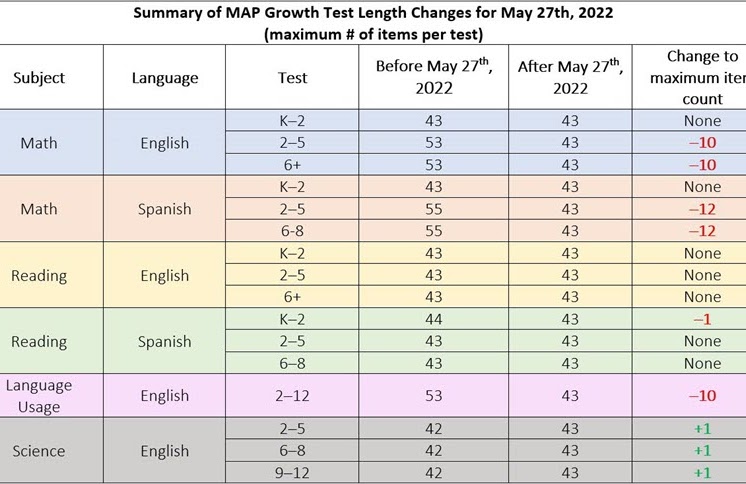
Evolution of NWEA MAP Test Scores
Since its inception in the early 2000s, the NWEA MAP test has seen several changes, particularly in how its scores are used, interpreted, and applied in the educational system. These changes have had profound implications for educators, students, and school systems alike.
1. Increased Use of Data for Decision-Making
Originally, the MAP test was primarily used to assess individual student growth, but over the years, the data derived from MAP testing has expanded to serve a variety of stakeholders. School districts, states, and even national education boards now use MAP test data to make large-scale decisions, such as determining curriculum effectiveness or assessing overall academic trends.
One significant change over the years has been the growing emphasis on using MAP data for accountability purposes. As education systems worldwide have moved towards more data-driven decision-making, nwea map scores by grade level 2025 have become a valuable tool for evaluating schools’ and districts’ overall performance. In turn, this has placed more pressure on educators to not only monitor individual student progress but also to meet specific performance benchmarks based on MAP scores.
2. Shifts in Scoring Methodology
Another key development in the evolution of MAP scores has been changes in scoring methodology and the development of more sophisticated score interpretation systems. In the early years of the MAP test, interpreting scores required significant expertise, as the RIT scale was still a relatively new concept. Today, however, NWEA has made significant improvements to how scores are reported, breaking them down into more specific areas of performance and providing predictive data on future academic success.
Additionally, advancements in technology have allowed NWEA to refine how data is presented. Teachers and school administrators now receive more detailed reports on individual students, including areas of strength, weaknesses, and even specific learning gaps. This has transformed the MAP test from a tool for measuring general academic performance into a powerful instrument for personalized instruction.
3. Normative Data and Changes in Expectations
One of the most notable changes in recent years is the inclusion of updated normative data that reflects the changing landscape of education. As more students from diverse backgrounds participate in the MAP test, the data used to compare individual student results to national norms has become more representative of a broader student population.
Alongside this shift, there has been an increasing recognition that expectations for student performance should evolve. In the past, expectations for growth were based on relatively static assumptions about what students should be able to achieve at certain points in their academic careers. Now, with more granular data available, educators and policymakers have a better understanding of how growth trajectories can differ depending on individual student circumstances, including socioeconomic background, access to resources, and previous educational experiences.
4. Impact of Common Core Standards and Other Educational Movements
The introduction of national initiatives such as the Common Core State Standards (CCSS) has also had an impact on the way MAP test scores are interpreted and used. As school curricula across the United States shifted towards the Common Core, NWEA made adjustments to ensure that the MAP test aligned with these new expectations. As a result, the content of the MAP test has become more aligned with the CCSS, reflecting a more rigorous set of academic standards.
These changes have led to a natural shift in how MAP scores are understood. For instance, students may have had higher MAP scores in earlier years when the standards were less rigorous, but as the Common Core raised the bar, those scores may appear lower, even though students are still making progress. This evolution of standards has sparked discussions around score interpretation, as educators have had to adjust their expectations and align them with the updated benchmarks.
The Current Role of NWEA MAP Scores
Today, NWEA MAP test scores are seen as a critical part of an educational system that places high value on data. They not only help teachers identify students’ current academic strengths and weaknesses, but they also serve as a tool for monitoring individual and group progress over time.
With more refined data and improved reporting systems, MAP test scores allow educators to tailor instruction to better meet student needs. Teachers can use MAP scores to personalize learning, provide targeted interventions, and ensure that no student is left behind.
However, the increasing reliance on data-driven decision-making also comes with challenges. Some critics argue that an overemphasis on standardized testing can lead to a narrow focus on test preparation rather than fostering a more well-rounded educational experience. The evolution of MAP scores has thus sparked ongoing debates about the balance between formative assessment tools and holistic education.
Conclusion
The NWEA MAP test has evolved significantly over the years, adapting to the needs of modern education while improving its ability to measure academic progress. From its increased role in data-driven decision-making to changes in how scores are interpreted and applied, MAP test scores now offer a wealth of information that can guide instruction and help educators meet students’ individual needs. While the growing reliance on such assessments has changed the landscape of education, it also highlights the importance of ensuring that these tools are used in ways that support the broader goal of fostering student growth and achievement.
 Nwea Map Test Scores 2025-2026